Home Blog Page 57

Generative AI Technology Investment in Industries: Everything You Need to Know

0

Generative ai powered chatbots impact to industries

In today’s fast evolving world, one technology is making a resounding statement: generative AI. A recent analysis by Bloomberg Intelligence predicts that enterprise investments in consumer-facing generative AI tools will skyrocket from $40 billion in 2023 to an astounding $1.3 trillion by 2032

The burning question on everyone’s mind is, “Where will this colossal sum be invested?” Surprisingly, more than 80% of business leaders have a clear answer. According to a survey conducted by Capgemini across 13 countries, they believe that the most promising return on their generative AI investments lies in chatbots.

These digital assistants are set to revolutionize customer service and knowledge management. While chatbots have been part of our daily lives since Siri’s debut in 2011, they have often left customers frustrated with their clumsy responses and awkward phrasing. 

Milestones

Despite improvements in technology for understanding and analyzing human language and emotions, a Zendesk CX Trends report from 2022 found that 3 out of 5 consumers were still frequently unsatisfied with their interactions with chatbots.

However, there is hope for change through generative AI. In November 2022, when ChatGPT was introduced, 100 million users experienced the potential of chatbots powered by large language models. These chatbots can quickly process a lot of information, provide intelligent responses in context, and communicate in a way that feels natural, much like human conversation.

This advancement has the potential to revolutionize customer and employee experiences across various industries. Currently, over 1.4 billion people, including more than 60% of Millennials, use chatbots, and this number continues to grow.

It’s worth noting that you might already be using chatbots without realizing it—Siri and Alexa are essentially advanced chatbots designed for entertainment and personal assistance.

In the following sections, we will explore how chatbots are being used in different industries. You can discover how to make the most of chatbot technology in your own industry.


Chatbot Technology in Healthcare

ai chatbot in healthcare industry

Physician billing can be costly, but healthcare facilities must find a balance between managing expenses and ensuring patients receive quality one-on-one time with their doctors. The use of chatbots in the medical field can be a valuable solution.

Chatbots can handle various tasks, such as appointment scheduling and addressing simple, repetitive inquiries, without consuming excessive time or leading to overcharging patients.

In 2022, the global market for healthcare chatbots was valued at $212 million. It is projected to grow significantly, reaching $647 million by 2030, as indicated by Vantage Market Research. This growth can be attributed to chatbots being utilized in both patient-facing interactions and behind-the-scenes administrative operations.

According to reports from Insider Intelligence, AI-powered digital assistants could automate up to 73% of tasks for administrative staff in healthcare facilities, contributing to this growth. In direct interactions with patients, the next generation of AI-powered chatbots is expected to enhance care for both healthcare providers and patients.

These chatbots are already delivering real-time responses to patient enquiries, offering guidance on diagnoses, treatment options, and medications based on the latest medical research, and streamlining the documentation of health records. This efficiency allows doctors and nurses to have more time to dedicate to patient care.


Generative AI-powered Chatbot in Banking

Chatbot Technology in Banking

Similar to healthcare, the banking sector is on track to significantly increase its investment in chatbots by 2030. According to Verified Market Research, this investment is expected to nearly triple, rising from $2.45 billion in 2022 to $6.9 billion. Already, banking customers are increasingly incorporating chatbots into their daily transactions.

Research by Bain & Company shows that from 2021 to 2022, the number of U.S. banking customers using chatbots for online interactions related to checking and savings accounts doubled.

With the integration of generative AI, banking chatbots will not only engage in more natural conversations but will also be able to access and analyze data and insights more rapidly. McKinsey predicts that the primary value of next-generation chatbots in the banking sector will be in responding to customer emergencies. They will partially automate, expedite, and enhance the resolution of customer crises, such as dealing with lost cards and stolen identities.

Furthermore, there are several other promising applications for generative AI-powered banking chatbots. These include guiding customers through the process of applying for loans, suggesting new financial products, providing advice on mortgage and debt repayment, and assisting credit analysts by offering recommendations for loan underwriting.


Generative AI Technology in Retail

Generative ai technology impact on retail business

In 2023, consumers worldwide are already spending a substantial $12 billion on retail transactions through chatbots. However, Juniper Research anticipates a massive surge, projecting that customers will be spending a remarkable $72 billion using retail chatbots by 2028, marking a fivefold increase in just five years.

There is a drawback, though. When customers encounter issues with their purchases, only 25% of them feel understood by traditional retail chatbots online, according to a recent Capterra survey. In contrast, when interacting with ChatGPT, a significant 67% of consumers feel understood, as revealed by the same survey. When you connect the dots, it becomes evident that generative AI has the potential to revolutionize the retail chatbot experience on a significant scale.

McKinsey’s analysis estimates that the value of tailored shopping interactions and personalized marketing outreach in the retail sector could range from $400 billion to $660 billion annually. Generative AI chatbots in retail have the ability to enhance customer engagement through conversations that feel human-like. These chatbots, armed with insights from customer behaviour and market trends, can offer personalized product recommendations to encourage cross-selling and upselling.

Retailers are already exploring the possibilities of using generative AI for improved customer engagement. For example, online retailer Stitch Fix is employing Dall-E 2’s text-to-image capability to visualize a customer’s desired clothing item. This technology translates text descriptions into matching items from Stitch Fix’s inventory, allowing customization of color, fabric, and style to meet each customer’s preferences.


Enhancing Insurance Industry with AI Technology

insurance industry with ai technology

In 2022, the global insurance industry invested $467 million in chatbot technology. According to Allied Market Research, this investment is expected to soar to $4.5 billion by 2032. This substantial growth is not surprising, especially when you consider the remarkable annual value that generative AI is set to contribute to the insurance sector: a staggering $1.1 trillion, as estimated by McKinsey.

Within that astounding figure, McKinsey predicts that insurers stand to gain $300 billion through the use of customer service chatbots and personalized product offerings.

However, there’s a significant challenge to overcome. Recent data from a Duck Creek Technologies survey in May 2023 reveals that 44% of policyholders still prefer speaking with a human when discussing insurance claims. Even more concerning, this preference has increased by nearly 10% compared to 2022.

In response, insurance companies are turning to generative AI to infuse a human touch into their customer service. According to a survey by Aite Novarica, 23% of insurers are currently testing new chatbot technologies, and 20% have already deployed them, especially since the introduction of ChatGPT.


Elevating Foodtech with Chatbot Technology

FoodTech integration with Generative AI

The food technology industry is undeniably one of the most demanding sectors globally. It operates with some of the fastest-moving products (SKUs) that have extremely short shelf lives and require high-stakes support. To meet its unique challenges and achieve scalability, the food technology sector relies on cutting-edge technology.

Moreover, there was a remarkable uptick in the demand for food delivery services over the past year. This surge in demand has attracted substantial investments from both domestic and international investors, totaling an impressive $10.8 billion.


In a Nutshell 

Generative AI technology investment is teeming with potential. From enhancing customer service in businesses to streamlining e-commerce experiences, and even revolutionizing education, chatbots offer a versatile toolkit for industries of all kinds. Their adaptability and groundbreaking capabilities are reshaping the way we interact with technology and each other. 

As we stand at the cusp of a $1.3 trillion generative AI revolution, it’s clear that chatbots are here to stay and will continue to play an important role in shaping the future of industries. 

Related articles:

Integrate ChatGPT with Lark: Boost Workflow with AI Chatbot

Artificial Intelligence is Transforming Cybersecurity Now

Multichannel vs. omnichannel: What is the difference in business?

0

multichannel vs omnichannel marketing

When it comes to multichannel vs. omnichannel, what exactly are their differences in business and marketing? Omnichannel retail, think of it as the superhero of selling, offers products through various avenues like websites, physical stores, and mobile apps.

On the other hand, multichannel is similar but might not offer as many buying options. Imagine it as a solid sidekick. Both have their strengths, and there’s no need to declare a winner. What’s clear is that relying on just one sales channel won’t cut it anymore. 

In this article, we’ll break down the differences between these strategies and help you understand why omnichannel marketing is the buzzword every savvy seller should know and adopt.


What is Multichannel Marketing?

Multichannel marketing means using different ways to promote your brand and connect with customers during their shopping journey. It involves using various channels, like emails or social media, to engage shoppers and create links between these channels. These connections help your brand stay in touch with customers.

For instance, a multichannel marketing plan might involve sending reminder emails to customers who abandoned items in their online shopping carts. It can also pave the way for omnichannel marketing, which we’ll discuss in more detail later.

How does multichannel marketing work?

Multichannel marketing is effective by connecting the different ways your customers engage with your brand. Consider the various touchpoints where customers interact with you: in physical stores, online shopping, and through advertisements. These are the places to start integrating your multichannel strategy and messaging.

To succeed, plan how to create a smooth and engaging experience for customers while using your time and resources efficiently. It’s also crucial to avoid repeating the same information in your multichannel messaging. The aim is to enhance the customer journey across channels like social media, streaming ads, and brick-and-mortar stores.


What is Omnichannel Marketing?

Omnichannel marketing is a strategy that unifies all your brand’s channels to create a seamless and complete experience for customers. This approach covers every stage of the customer journey, from initial awareness at the top of the marketing funnel to post-purchase interactions. It’s a more extensive and integrated version of multichannel marketing, where all channels work together in a unified strategy.

How does omnichannel marketing work?

Omnichannel marketing sets itself apart from multichannel marketing by seamlessly integrating all available channels into your advertising strategy. While omnichannel is a comprehensive approach that covers all channels, it’s important to note that not all multichannel strategies meet the criteria of being omnichannel.

Omnichannel marketing goes beyond just customer-focused content. For instance, in an omnichannel campaign, advertisements are synchronized across various platforms such as social media promotions, banner ads in newsletters, and in-store posters. Additionally, it can involve automating the processes for tracking analytics, performance metrics, and measuring sales outcomes.


What is the difference between omnichannel vs multichannel marketing?

The primary difference lies in the scope of channels involved: multichannel marketing involves a limited selection of content channels, while omnichannel marketing covers all available channels. The term “multichannel” means “many channels,” whereas “omnichannel” means “all channels.”

You can think of omnichannel marketing as covering the entire customer journey map, while multichannel marketing is more like focusing on a specific point from A to B.

Moreover, multichannel marketing places a greater emphasis on engagement within the different channels, whereas omnichannel marketing prioritizes customer comprehension and strives to create a seamless experience.

Considering the retail aspect, multichannel retail involves distributing products through various channels. For example, it includes selling goods on a website and in a physical store simultaneously.

Omnichannel retail, however, takes it further by considering the needs of customers and reaching them where they are, through all available channels. For instance, that could include integrating ads into at-home streaming experiences, rather than waiting for them to visit a store. Multichannel retail is a straight line from the brand to the customer, whereas the path of omnichannel retail is more fluid or circular.


1) Customer engagement vs customer experience

A critical distinction between multichannel and omnichannel marketing lies in their primary goals. Multichannel marketing primarily focuses on engaging customers and widening the reach to make more people aware of a business. In contrast, omnichannel marketing centres on enhancing the customer experience for those who are already aware of and engaging with a business. 

In summary, multichannel aims to expand awareness, while omnichannel strives to provide a consistent and seamless experience for existing customers.

2) Channel centric vs customer centric

Another fundamental difference lies in the approach to channels: multichannel is channel-centric, while omnichannel is customer-centric.

Multichannel marketing aims to maximize the number of channels used to promote a brand, offering customers a wide array of choices in how they engage with the business. The more channels available, the more options customers have.

On the other hand, omnichannel marketing places the customer, not the channel, at the centre. The primary focus is on providing an optimal experience as customers switch between channels, eliminating any friction between different digital touchpoints.

In the context of retail, for instance, a multichannel approach would involve a multitude of channels like websites, SEO, paid advertising, billboards, TV and radio ads, emails, social media, and even phone calls.

In contrast, an omnichannel focus would streamline these to a select few, such as websites, email, and social media, ensuring that they are seamlessly interconnected to facilitate customer transitions between them.

3) Quantity vs quality

Another critical difference between multichannel and omnichannel strategies pertains to the number of contact channels versus the quality of support provided through these channels. In a multichannel approach, the emphasis is on increasing the number of available channels, with the belief that more channels are better. This broadens the reach and allows customers to select their preferred method of engagement.

However, there’s typically no effort to integrate or link these channels, which means that when customers switch between them, they often have to start over. This lack of synchronization can impact the quality of customer support.

For example, if a customer encounters login issues and decides to call customer services for assistance, the phone agent guides them through the password reset process. After the call ends, the customer begins following the steps but encounters an unexpected issue not mentioned by the agent.

They believe that providing a visual, such as a screenshot, would be more effective, so they decide to contact customer service via email this time. However, because the email and phone channels are not synchronized in a multichannel setup, the customer is required to explain their problem all over again in the email, leading to potential frustration and a less efficient support experience.

In an omnichannel approach, the primary focus is on providing consistent and high-quality support across all of a business’s channels. Customers can choose any available channel with the confidence that the support they receive will maintain the same level of quality. It’s important to note that the consistency is in terms of quality, not necessarily the type of support.

In an omnichannel strategy, different contact channels are intentionally varied to handle the various types of support a customer might require. For instance, a simple inquiry can be efficiently addressed through a live chat interaction, while more complex issues related to editing a shopping basket might necessitate a more visual form of support, such as video chat or co-browsing.

The key to ensuring consistent quality in an omnichannel approach is the integration of all the offered channels. Unlike a multichannel setup, an omnichannel strategy enables customers to transition seamlessly between different channels without the need to repeat their entire situation.

Using the forgotten password example, when the customer switches from a phone call to email, they don’t have to re-explain the entire issue. This seamless transition is facilitated by recording and sharing relevant details of the customer’s interaction across channels, often through a Customer Relationship Management (CRM) system.

This way, the agent handling the email inquiry can access the information from the previous phone call, providing valuable context for a more effective and efficient response.


How do you choose between a multichannel and an omnichannel marketing?

Your marketing strategy should be determined by your primary business goals. If you’re aiming to achieve specific brand-related goals, then multichannel strategies may be beneficial. Conversely, if your focus is on enhancing the overall customer experience, adopting an omnichannel strategy can contribute to a more comprehensive improvement.

Moreover, the resources at your disposal are a critical factor in this decision-making process. Smaller brands might find it challenging to implement a fully-fledged omnichannel strategy right away. In such cases, starting with incremental steps within a multichannel approach is a pragmatic way to gradually build momentum.

You don’t have to launch a website, email newsletter, social media presence, and marketing campaigns all simultaneously. Initially concentrating on individual channels or “silos” and introducing updates over time can be a strategic approach.

In fact, there isn’t a single correct answer, and you aren’t limited to choosing just one approach. Multichannel and omnichannel strategies can also complement each other, depending on your business goals and available resources.

What’s the best approach? 

Customer experience holds immense importance for any business or organization and should remain a central focus. In light of this, an omnichannel approach is superior to a basic multichannel approach.

However, this doesn’t mean you shouldn’t expand the range of channels through which you interact with your customers. In fact, it’s essential for a business to be present where their customers are and to provide preferred engagement channels as a means of differentiating themselves from competitors. 

It’s important to note that an omnichannel approach is still a multichannel approach, as it offers customers multiple contact and marketing channels. The key distinction lies in the way all these channels are integrated and treated as interconnected parts of a unified whole, rather than isolated and separate entities.


Final takeaways 

All in all, the differences between multichannel and omnichannel strategies comes down to the level of integration and customer-centricity. Omnichannel puts the customer at the heart of the business, weaving together various touchpoints for a seamless shopping experience. Multichannel, while still effective, lacks the same level of integration and personalization.

Both approaches have their merits and complexities, but with the right technology and careful planning, businesses can thrive in the ever-evolving world of retail. The key is recognizing that in today’s landscape, embracing multiple channels is not just an option but a necessity to meet customer expectations and stay competitive.

Explore the future of retail with Exabytes New Retail!

Discover more at: Exabytes New Retail Managed Services

Related articles:

How to Manage Multiple Retail Stores & Locations Effectively

How Technology Boost Retail Industry Evolution in 200 years

Website Builder Essentials: Don’t Launch Without These Features!

0

website builder essential features

Are you eager to create your own website but lack the technical know-how? No worries, you’re not alone! Building a stunning and functional website for your business has never been easier, thanks to website builders.

In this article, we will explore the essential features every website builder or web maker should offer. It does not matter if you’re in Malaysia or anywhere else in the world, we’ve got you covered. 

What is a website builder?

Website builders simplify the process of creating and managing your own website. Certain advanced ones provide custom domain names, web hosting, free SSL certificates, and limitless storage.

While some website builders are great for beginners, others like Visual Composer cater to experienced web developers. As long as you know your requirements, you can find a suitable website builder for your small business site.

What are the benefits of using a website builder?

Website builders make building websites super simple. Here are the main advantages:

  • No need to be a coding whiz to use them.
  • They offer ready-made templates and a drag-and-drop interface.
  • You can skip hiring a web designer.
  • Quick and easy setup and maintenance.
  • Your website will look good on mobile devices.
  • Easy online editing from any gadget.
  • Save time and money.


Discover the Best Website Builder Features for Effortless Website Creation

Now that you know why website builders are handy, let’s talk about the top features they should have.

1. Easy to use

According to studies, 25% of folks admitted they’re newcomers and not too savvy when it comes to website design. Only 22% consider themselves “pro website builders,” meaning they’ve got the lowdown on HTML, CSS, e-commerce tweaks, and other techy stuff.

So, if you’re in the newbie or non-techie camp, a DIY website builder is probably your best bet. Most of these tools are straightforward, easy to get the hang of, and boast a user-friendly interface and experience (UI and UX). If you can click, drag-and-drop, and upload pictures, you’re already equipped with the skills to craft your own website.

A good website builder should also be user-friendly. It should provide guides, tutorials, and support documents to lend you a helping hand as you go about creating your website.


2. Drag and drop editor

With a drag-and-drop editor, you can arrange the page just the way you want and tweak elements as you please. Because it’s user-friendly, you can relax once you hand over the completed website to your clients. You can play around with various layouts until you discover the one that’ll deliver an outstanding user experience.


3. A variety of themes

You wouldn’t want your website to be a carbon copy of someone else’s, right? That’s why it’s essential to choose a best website builder that offers a diverse range of eye-catching templates or themes.

Having plenty of themes to choose from reduces the chances of your website looking identical to another. You can give your site a unique vibe by tweaking colors, layouts, and features to match your business’s personality.

Moreover, certain themes are tailored for specific businesses or industries. For example, if you run a photography business, you’d probably prefer a template with a photo slideshow on the homepage to showcase your best shots.

However, don’t immediately dismiss a website builder if it only offers a few themes. Even with a limited selection, each theme can often be customized extensively, allowing them to look and feel different, even if they share the same core template.


4. Pre-formatted web page layouts

Your website design template gives you a jumpstart by offering essential design elements like layout, colors, and font styles. But what if you want to add more pages and aren’t sure where to begin? That’s where pre-designed and pre-filled page layouts come to the rescue.

In short, pre-filled page layouts come with ready-made spots for images, text, and other elements commonly found on a specific page type. All you have to do is choose one that suits your needs and then swap out the sample content with your own. It makes creating new pages a breeze.


5. Mobile responsive

In 2018, Statista’s research revealed that 52.2 percent of the world’s website traffic came from mobile phones. Statcounter supported this finding, indicating that global mobile phone usage rose to 51.11% in July 2019, surpassing desktop (45.18%) and tablet (3.71%) usage.

In response to this trend, Google has considered mobile responsiveness a crucial ranking factor in search results since 2015.

Today, people use various devices of different shapes and sizes, such as phones, tablets, laptops, and desktops. Because of this, it’s essential for your website to be mobile responsive. This means it should automatically adapt to fit any screen your visitors use, regardless of the device they choose.

By ensuring your website is mobile responsive, you’re also preparing it for the future. 


6. Compatible with different browsers 

A browser is a software tool that lets you access websites on the Internet. Some well-known internet browsers include Google Chrome, Safari, Opera, and Firefox, among others.

However, it’s important to note that visitors to your website will use various browsers to view your site. This can pose a challenge because certain website technologies may not work the same way on all browsers. For example, your website might look perfect on Google Chrome but appear differently on Safari.

To ensure a smooth experience for all users, it’s important to choose a website builder that’s compatible with all major browsers. You can easily check this by reaching out to the website builder’s support team or by reading online reviews and resources to verify that it works seamlessly with different browser types.


7. SEO tools

A recent report found that a whopping 83% of customers turn to search engines when searching for a business online. According to SEO Moz, achieving a spot on the first page of search results can boost your website’s traffic by a substantial 42.25%.

Clearly, it’s a no-brainer that you’d want your website to land on the first page of search results all the time. But how can you increase the chances?

If your website builder comes equipped with robust SEO tools, you can put them to good use to enhance your website’s ranking. These tools typically include features like title tags, keyword assistance, meta descriptions, and sitemap generators.


8. Google Analytics Integration

Website analytics play an important role in shaping, growing, and refining your business strategy. When it comes to tracking and analyzing website data, Google Analytics is one of the best.

Google Analytics empowers you to monitor your daily website visitors, explore how they engage with your site, analyze their browsing or purchasing habits, and much more. It also provides insights into which of your web pages are attracting the most traffic and which ones could benefit from further improvements.

Therefore, it’s a smart move to opt for a website builder that seamlessly integrates with Google Analytics. 


9. Built-in project manager

Boost your efficiency with the built-in ticket system and to-do manager, which help cut down on the time spent managing and designing each project.


10. Pain-free collaboration

This ensures every client receives their own dedicated portal, allowing them to complete tasks like filling out a pre-design survey, uploading data, and providing feedback using the on-page feedback tool.


All in all

Now that you’re equipped with the knowledge of essential website builder features, you’re ready to get started on your online journey. Remember, the best website builder is your trusted ally in creating a stunning, user-friendly website, whether you’re in Malaysia or anywhere else.

With these tools at your fingertips, you can confidently create your own website and make a mark in the digital world. Don’t launch your online venture without these critical features; they are the building blocks of your success. 

Ready to streamline your website projects and enhance client collaboration? Explore Sitejet, the all-in-one website builder with project management features and a customer portal!

🚀 Build stunning websites with ease
📊 Manage projects efficiently
💬 Collaborate seamlessly with clients

Experience the power of Sitejet today and revolutionize your web design workflow.

Don’t miss out! Get started now and take your web design projects to the next level:

Explore Sitejet Website Builder Now

Related articles:

About Plesk’s SiteJet -Integrating Website Creation and Project Management

Project Management Skills Needed by Project Managers

AI Chatbot Comes to WordPress: Enhancing User Experience with ChatGPT

0

AI Chatbot Comes to WordPress Plugins

Introducing ChatGPT for WordPress plugins– the game-changing AI chatbot that’s set to revolutionize your WordPress website or blog. Imagine having a trusty virtual assistant at your fingertips, effortlessly churning out top-notch content, all while saving you time and money. With ChatGPT, your WordPress experience is about to reach new heights.

This innovative ChatGPT plugin, powered by the cutting-edge GPT-4 technology, opens up a world of possibilities for users worldwide. It’s not just a chatbot; it’s the complete AI package for WordPress.  

In this article, we’ll guide you through the exciting ways you can seamlessly integrate ChatGPT into your WordPress platform, unlocking a universe of potential for your content creation journey.

What is ChatGPT? 

ChatGPT is a smart AI tool known for giving detailed and human-like answers when you ask it questions. It’s like a computer program that uses artificial intelligence to have a conversation with you. What makes it special is that you can ask it more questions based on its responses, and it will come up with new answers. It’s a bit like talking to a chatbot, but more advanced.

This advanced version of OpenAI can help you be more productive and creative. But how do you use it, and what should you think about before using it? Let’s find out below.

How ChatGPT works with WordPress

ChatGPT easily works with WordPress, adding a smart AI layer to your website. It does this through a special plugin that links your WordPress site to the OpenAI system. Once you’ve installed and set up the plugin, your website gains the ability to chat with users in real time. It can give them smart answers, suggestions, and help.

ChatGPT uses its extensive knowledge to understand and respond to what users ask, making it a valuable addition to your WordPress website. It’s easy for users to interact with, even if they aren’t tech-savvy, and you can customize it to match your specific needs. This ensures a smooth and improved experience for your website visitors.

How to install ChatGPT on WordPress

To set up ChatGPT on your WordPress site, follow these steps:

Step 1: If you don’t already have one, create an account on OpenAI’s platform at platform.openai.com.


Step 2: Once you’re logged in, go to your profile by clicking on the profile icon and selecting “View API Keys.”

ChatGPT API keys

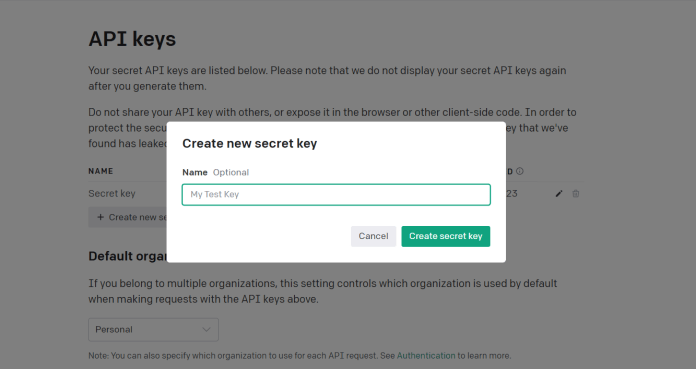
Step 3: Click on “Create New Secret Key” to generate a new API key.

create new API Keys ChatGPT

Step 4: Install the ChatGPT WordPress plugin on your website.

ChatGPT OpenAI WordPress Plugins

Step 5: In the plugin settings, enter the API key you generated earlier.

It’s done. You’re now ready to use the ChatGPT AI model to create content on your WordPress site. This plugin is free.


More powerful ChatGPT WordPress plugins

Now, let’s look at some ChatGPT WordPress plugins that can help incorporate AI technology into your site and improve your workflow:

AI Engine

AI Engine WordPress Plugin

AI Engine empowers you to create a chatbot similar to ChatGPT and customize its behaviour. This versatile plugin allows you to do many things like generating content and images, brainstorming titles and ideas, populating WooCommerce product fields, and more—all you need is an OpenAI key!

With AI Engine, you also gain access to other useful tools, including an SEO optimizer that can generate titles, keywords, and excerpts for you. Here are some key features:

  1. Easily add a ChatGPT-style chatbot to your website using a shortcode, and choose from different display modes like fullscreen, popup, and window.
  2. Get creative by generating new titles and content ideas with the plugin.
  3. Quickly create descriptions for your WooCommerce products.
  4. Access a range of AI tools, such as a text corrector, translator, and even a restaurant review writer.
  5. Keep track of your OpenAI usage with built-in statistics.

About the Plugin: https://wordpress.org/plugins/ai-engine/ 


AI Mojo

AI Mojo ChatGPT WordPress Plugins

AI Mojo is another handy AI-powered writing tool you can use for your blog. It’s a Bring Your Own Key (BYOK) plugin, and you have the choice between using OpenAI GPT-3 or AI21 Studio.

Once you’ve input your API key, you can access the AI Mojo panel right within the Block Editor of your website. From there, you can easily select a template and provide a prompt. The tool will then generate the content you’ve requested.

Here are some key features of AI Mojo:

  1. Generate article outlines, conclusions, introductions, and more with ease.
  2. Paraphrase, rewrite, or shorten existing content to suit your needs.
  3. Utilize the AI Mojo Wizard to generate complete articles quickly and efficiently.
  4. Find relevant images by giving the tool a prompt.

About the plugin: https://wordpress.org/plugins/ai-mojo/


ContentBot AI Writer

ContentBot AI Writer WordPress Plugin

ContentBot AI Writer is a valuable tool for bloggers. This plugin links your website to the AI Writer web app, allowing you to generate ideas and content right from your WordPress dashboard. 

ContentBot operates using OpenAI’s GPT-3 model. After installing the plugin on your site, you’ll need to input your API key to get started. Once that’s done, you can make use of the AI Content block to create various types of content. Here are some key features:

  1. Summarize lengthy content into easily understandable sections.
  2. Generate talking points, outlines, and ideas for your topics.
  3. Adjust the tone of your writing to match your desired style.
  4. Craft a compelling value proposition for your product or service.
  5. Use the bullet point expander to turn simple lists into detailed paragraphs.

About the plugin: https://wordpress.org/plugins/content-bot/


Top Use Cases of ChatGPT Integration in WordPress

1. Content creation

You can utilize ChatGPT to produce AI-generated content, such as blog posts, for your WordPress website. ChatGPT relies on advanced machine learning algorithms to create human-like responses to user queries.

This system has been trained on a vast amount of text data, enabling it to generate and translate text in various styles and formats. Whether you use ChatGPT on its own or in conjunction with other AI content generators, it simplifies the process of crafting blog posts, social media updates, and other content that’s tailored for search engines and social media platforms. 

2. Search Engine Optimization (SEO) 

SEO is crucial for websites and blogs because it helps your pages become more discoverable on the internet. The objective is to elevate your pages in Google search results for specific keywords, which is how your intended audience is likely to come across them. With ChatGPT, you can receive SEO recommendations with just a few clicks, eliminating the need to hire and pay a consultant.

Here’s how it works: ChatGPT aids you in optimizing your website content for search engines by generating a list of keywords or directly incorporating them into your texts. This approach enhances your SEO rankings, boosts traffic to your WordPress site, and generates more leads.

3. Coding in WordPress

Exercising caution when using code generated by ChatGPT is essential. While it can serve as a helpful starting point, we strongly advise having a reliable WordPress developer review it before putting it into action.

It’s important to keep in mind that code generated by ChatGPT might not always fully address the specific problem you’re trying to solve. Additionally, it’s worth noting that additional steps may be required for the code to handle payment processing. Nevertheless, ChatGPT can be a valuable tool for generating WordPress code, and some developers have even used it to create entire plugins.

4. Creating a marketing campaign for your website or blog

When it comes to marketing, capturing your audience’s attention and maintaining their interest can be a tough task. With ChatGPT, you can craft engaging marketing emails and other content to make your message stand out. 

For instance, you can use ChatGPT to compose emails that remind potential customers about their abandoned shopping carts, introduce your latest blog post, or even combine both. Moreover, you have the flexibility to infuse a touch of humor or even create a poem, adding a unique flair to your emails that aligns with your brand’s style. 


All in all

ChatGPT for WordPress is a transformative AI chatbot, powered by the remarkable GPT-4 technology, that’s rapidly reshaping user experiences across the globe. Its proficiency in generating top-tier content opens up a world of possibilities for users from various industries and regions.

Beyond merely reading AI-generated content, your website visitors can now engage and interact with this cutting-edge AI bot. It does not matter if you’re a blogger looking to streamline your content creation or a business seeking to enhance user engagement, ChatGPT is the ultimate plugin to take your WordPress website to the next level. 

Get started now and unlock the full potential of your WordPress website.

Ready to supercharge your WordPress website? Look no further! Our lightning-fast, secure, and reliable WordPress hosting is here to take your website to the next level.

Don’t miss out on the opportunity to boost your website’s performance and security. Join the thousands of satisfied customers who have already made the switch to our WordPress hosting.

Click the button below to sign up and experience the difference!

Get Started with a Managed WordPress Hosting Now

Related articles:

Google’s BARD and OpenAI’s ChatGPT: Comparison between AI Chatbot

AI Chatbot Tools of 2023: Alternatives to ChatGPT That You Can Try

Digitalisation 数字化力量:如何【以人为本】打造无缝的购物旅程

0

Digitalisation - The Digital Power Empowering Seamless Shopping Journeys

随着科技技术的进步,顾客接触信息的方式变得多样化且分散。他们不仅可以通过线下活动或实体店铺获取信息,还可以随心切换在各种平台上浏览,如TikTok、Facebook、Instagram和小红书等。

这个时代既充满挑战,也蕴含着机遇。

得益于科技的发展,我们可以利用数字化手段(digitalisation strategy)来可视化顾客的行为,引导他们更好地完成购物旅程。对于品牌决策者来说,这已经不再是一种选择,而是确保生存和持续发展的必要条件。

那么,作为品牌方,我们应该如何塑造一个无缝的消费旅程,提供基于【以人为本】理念的购物体验呢?

让我们深入探讨三个关键问题:


问题 1:什么是 Customer Journey(顾客旅程)?

顾客旅程不再是简单的购物过程,而是一个动态而多元的体验,由多个接触点(Touch Point)构成。这些接触点包括搜索、产品评估、购买决策、售后体验等等。在这个旅程中,每个顾客都有独特的需求和动机。因此,了解他们的旅程,了解他们的心理和行为至关重要。只有这样,我们才能为他们提供真正贴近人心的个性化体验。

问题 2:为什么接触点(Touch Point)如此关键?

接触点代表着顾客与品牌之间的互动时刻和地点。在现代多渠道购物环境中,顾客可以在各种不同的接触点与品牌互动,如社交媒体网站、实体店、移动应用等等。每个接触点都是一次宝贵的机会,可以影响顾客的购物旅程和购买决策。因此,品牌需要深入了解这些接触点,以便在每个接触点上提供一致且个性化的体验。

问题 3:品牌为什么需要关注 Customer Journey(顾客旅程)?

品牌需要关注顾客旅程,因为现代顾客的购物行为已经变得复杂多样,不再是线性的。顾客期望能够根据自己的需求随时随地完成购物,而不受时间或地点的限制。他们在购买决策过程中涉及多个接触点,而这些接触点因人而异。因此,品牌必须重新思考线上和线下的界限,以满足顾客在不同接触点的需求

今天的顾客生活和购物在一个无渠道界限的世界中,这使得无摩擦的全渠道战略比以往任何时候都更加重要。全球范围内,自2022年初以来,对实体店的搜索兴趣几乎增加了两倍。与此同时,90%的亚太地区消费者期望零售商在线销售他们的产品,即使那些线下购买的人仍然会在研究过程中参考至少一个数字渠道。


如何设立品牌的 Customer Journey(顾客旅程)

以人为本,围绕着顾客需求展开,是建立一个成功的顾客旅程的关键。为了实现这一点,品牌需要进行全面的用户旅程规划。

首先,品牌必须发现顾客的真正需求。这并不仅仅意味着关注公司的销售额增减,而是要深入了解顾客在整个购物旅程中的行为和喜好。参考下图的“用户旅程”中,我们可以清晰地看到,顾客在购物过程中经历了多个阶段,从初次接触商品信息,产生兴趣,展开调研比较,进行选择,到最终的购买,然后使用、复购、分享,甚至主动推荐朋友购买等等。在这个旅程中,顾客会接触到社交媒体、关键意见领袖(KOL)、直播电商、网络商城、实体店等多种渠道,形成丰富的“触点”。

了解这些触点和顾客行为对于品牌来说非常重要,因为它们代表了品牌与顾客之间的互动时刻。只有深入了解这些触点,品牌才能够在每个接触点上提供一致且个性化的体验。

customer journey strategies
图上讲述,顾客会接触到多种渠道比如社交媒体、关键意见领袖(KOL)、直播电商、网络商城、实体店等,因此拟定适合的用户旅程模式,才能对症下药。
different nodes of user operations
图上讲述,根据用户旅程不同节点的用户运营。品牌能够了解与顾客的接触点和行为,以能够提供一致且个性化的体验。

数字化工具(Digital Tools) 改变了一切

在过去,品牌对于顾客所经历的消费旅程了解有限,主要依赖行业经验和猜测来做商业决策。然而,现在和未来,品牌可以利用数字化工具来建立数据侦测点,从而深入了解顾客的行为和需求。

这些数字化工具能够收集大量多样化的顾客旅程数据。通过分析这些数据,品牌可以更清晰地了解顾客的分类以及不同的旅程路径。有了数字化工具的帮助,分析变得更加高效,让品牌能够在不同的接触点上激发顾客的需求,将产品或服务融入顾客的生活场景中,从而提高企业的业务增长。

这种数字化转型 (Digital transformation)不仅仅让品牌更了解顾客,还有助于提供更加个性化的体验,提高忠诚度,从而加强品牌与顾客之间的关系。未来,数字化工具将继续在塑造以人为本的顾客旅程中发挥关键作用。

顾客旅程必经之路:评估和优化会员运营

一旦顾客成功转化为会员,会员运营就变得至关重要。这需要品牌不断练习和积累的能力。品牌可以利用各种数字化工具来可视化、量化和优化顾客旅程中的行为特征,以及优化这些行为的转化效果。

Exabytes New Retail Solutions (新零售服务)提供的工具为例,通过数字工具可以测量顾客在旅程的各个环节中的消费行为和习惯。这些工具可以帮助品牌商客户更好地了解和改进他们的会员运营策略和方法。

其中,NAPLRS会员分群模型将会员分为不同的类别,包括:

  • New:第一次消费的顾客
  • Active:第二次以上消费的顾客
  • Potential:第二次以上,但超过3倍购物周期未购买的顾客
  • Lost:第一次消费,但超过3倍购物周期未购买的顾客
  • Ready to Buy:注册后未购买的顾客
  • Sealed:曾经有消费,但超过一年未购买的顾客
NAPLRS 会员分群模型
图上讲述,NAPLRS会员分群模式。
NAPLRS 会员分群操作 精准沟通的能力
图上讲述,NAPLRS会员分群操作,精准沟通的威力。

此外,购买意图模型DCIU将顾客分为不同的类别,包括:

  • Deciding:决定者
  • Considering:考虑者
  • Inquiring:查询者
  • Uninterested:无兴趣者
模型分群,依据购买意图高低分为四种族类
图上讲述,模型分群,依据购买意图 (purchase intention) 高低分为四种族群。
purchase intention DCIU
图上讲述,购买意图模型 (DCIU)

通过数字化“顾客运营”工具,可以帮助品牌实现与顾客旅程的关系链路的可视化、可量化及可优化,看清楚顾客的行为流程,发现问题出在哪里,然后对症下药,优化运营策略。

利用数字化方法 (digitalisation strategy) 有效运营流量,将会帮助品牌更好地理解和满足顾客的需求,提高忠诚度,增加销售。这是【以人为本】的新零售行销策略的核心,通过深入了解顾客的旅程和行为,品牌可以在竞争激烈的市场中脱颖而出,赢得顾客的心,并持续发展壮大。

内容至上:在互联网时代连接用户心灵的关键

有了适用的工具,也只能做到事半功倍的效果。品牌若要在竞争激烈的市场中完成持续的盈利闭环,对于顾客运营需要多下一些功夫。

许多企业主可能会认为,只需要做好曝光率的阶段,触达人群的渠道越多越好,触达的面越广越好。然而,“触”和“达”其实是两个不同的层面。即使连接了全渠道所有的触点,如果不能真正理解顾客的真实需求,最终的结果只是“触”而不“达”。

“触”是场景;“达”是内容。传统时代一句同样的广告语在电视广告上可以重复播放三遍,这种有知名度但不一定有忠诚度的叫卖式广告,已经不适用于新世代用户。内容必须具有吸引力,才能让顾客驻足观看,甚至参与其中。内容是品牌真正连接顾客、沉淀顾客、转化销售的关键所在 。因此,品牌应该将资源集中在品牌经营和内容深化上,让数字化工具简化以减轻重复营销工作的负担才是上策。

企业主必须明白,互联网时代的顾客是到处流动的,池子里的鱼并不是自己的,一旦不满意就会寻找新的。品牌持续经营的关键是在建立好自己池子的生态,吸引更多的鱼流经自己的池子,留在池里,并沿着自己规划的顾客路径被激发。

数码转型,势在必行!

想要为您的客户创造无缝的购物体验吗?不仅如此,数字化转型 (digital transformation) 能够为您带来更多的商机和增长。立即点击,深入了解Exabytes的新零售服务,让我们的专家团队帮助您实现这一目标,并让数字化全面助力您的业务发展!

Request A Demo

让我们的顾问全面为您展示
这套以价值驱动的新零售方案吧!

相关资讯来源:

打造「以人為核心」的購物、行銷以及收/取貨體驗最為關鍵

Marketing strategies: Year in Search Malaysia Trend

Year in Search 2022: Look Back to Move Your Marketing Forward

哈佛商业评论月刊:数据创造竞争优势,企业要思考7个问题

2023 Cybersecurity Trends: Navigating the Evolving Threat Landscape

0

Evolution of Cybersecurity Trends in the Threat Landscape

As we journey through 2023, the cybersecurity landscape is undergoing a dynamic transformation, characterized by emerging challenges that demand our attention.

In this article, we’ll first explore the prominent cybersecurity challenges and then delve into effective strategies to address them. Our goal is to equip you with the knowledge and tools needed to safeguard your digital assets in an ever-evolving threat environment.

The Growing Complexity of Cyber Threats

The foremost challenge in 2023 is the increasing complexity of cyber threats. Attackers are becoming more sophisticated, employing advanced techniques and tools to breach even the most fortified defenses.

From nation-state actors to cybercriminal organizations, adversaries are relentless in their pursuit of vulnerabilities for financial gain, espionage, or disruption.

To combat this challenge, organizations must adopt a multi-pronged approach:

1. Advanced Threat Detection

Investing in advanced threat detection systems that utilize machine learning and artificial intelligence to identify and mitigate threats in real-time.

2. Zero Trust Security

Implementing a zero-trust security model where trust is never assumed, and verification is required from anyone trying to access resources in the network.

Related: Preventing and Defeating Ransomware: Best Practices

3. Employee Training

Providing ongoing cybersecurity training to employees to enhance their awareness and ability to recognize and respond to threats like phishing attacks.


Ransomware and Extortion Attacks

Ransomware attacks have been a persistent threat and continue to escalate in 2023. These attacks involve encrypting a victim’s data and demanding a ransom for its release. Extortion attacks, where attackers threaten to release sensitive information unless a ransom is paid, have also become more prevalent.

Addressing this challenge requires a proactive stance:

1. Regular Backups

Maintaining secure backups of critical data to mitigate the impact of ransomware attacks.

2. Robust Incident Response Plans

Developing and testing incident response plans to ensure a swift and effective response in case of an attack.

Related articles: Incident Response Planning – Beginners Best Practices

3. Employee Vigilance

Educating employees about the dangers of suspicious emails and links, as many ransomware attacks start with phishing attempts.


Vulnerabilities in IoT and Edge Devices

The proliferation of the Internet of Things (IoT) and edge computing has brought convenience and efficiency but also introduced new security challenges. With billions of IoT devices connected to the internet, they have become attractive targets for attackers seeking to compromise networks.

To tackle this challenge, organizations should consider:

1. Device Authentication

Implementing strong authentication methods for IoT devices to prevent unauthorized access.

2. Segmented Networks

Isolating IoT devices on segmented networks to limit the potential impact of a breach.

3. Regular Updates

Ensuring that IoT devices receive regular security updates and patches.


Supply Chain Attacks

Supply chain attacks involve compromising a trusted vendor or supplier to gain access to the target organization’s network. These supply chain attacks have seen a rise in 2023, targeting software providers, hardware manufacturers, and service providers.

To address this challenge, organizations should:

1. Vendor Assessment

Conduct thorough security assessments of third-party vendors and assess their cybersecurity practices.

2. Zero Trust Principles

Apply zero trust principles to interactions with third-party organizations, verifying their security posture before granting access.

3. Multi-factor Authentication (MFA)

Enforce Multi-factor Authentication (MFA) for remote access to critical systems and data, reducing the risk of unauthorized entry.

For more information on how to defend against software supply chain attacks, click here.

Effective CyberSecurity Strategies for 2023 and Beyond

Lastly, to effectively counter these cybersecurity challenges, both organizations and individuals must take proactive measures to fortify their digital defenses. By gaining a comprehensive understanding of these challenges and then implementing the corresponding solutions, we can work together to fortify our digital future and uphold the security of our online domain.

Investing in continuous learning and skill development is a pivotal aspect of this endeavor. Explore a curated catalog of HRDC claimable cybersecurity courses to empower yourself and your team with the knowledge and skills required to adeptly navigate these challenges.

These courses are designed to provide practical insights and hands-on experience, ensuring that you are well-equipped to handle evolving threats and protect your digital assets effectively. Embracing ongoing education and staying vigilant are our strongest assets in the battle for a secure digital world.

Safeguard your business from cyber threats! Explore our cutting-edge cybersecurity solutions at Exabytes Customisable Security Solution and stay one step ahead of potential risks today!

Stay Protected, Explore Now

Related articles:

AI Assistants & AI Scammers: Dual Faces of Cybersecurity

Data Privacy Best Practices: Are You Missing Out?

Are You Overlooking Data Privacy Best Practices? Here we are.

0

data privacy best practices

In today’s hyper-connected world, where every click, swipe, and like generates a great amount of data, protecting your personal information is highly important. Regardless you’re scrolling through social media, shopping online, or simply using your smartphone, you’re constantly sharing your data with various organizations.

However, this digital age convenience also brings an ominous shadow: data breaches and cyber-attacks are on the rise, turning data privacy into a top concern. In 2023, the significance of a robust data security strategy cannot be overstated.

Shocking statistics reveal that over 22 billion records have been exposed due to more than 4,100 data breaches. Are you taking the necessary precautions? The truth is, more people worry about their privacy.

In a recent survey, over 80% of respondents were concerned about their personal information being shared without permission. This shows how important data security is for everyone. But when it comes to how people handle their own and others’ data, there aren’t always good protections. Many still fall for scams like social engineering, phishing, identity theft, and more. We need to do better.

In this article, we are pleased to outline the best practices for data security to protect data privacy. Incorporate these practices into your data security strategy to stay safe. 

What is Data Privacy? 

First of all, data privacy involves safeguarding an individual’s personal information and sensitive data from unauthorized access, disclosure, or misuse. It includes a range of principles, rules, and actions designed to secure data collection, processing, and storage, while also giving individuals control over how their information is utilized.

In our modern digital era, data privacy is of utmost importance, as it protects people’s rights and builds trust in how organizations and entities handle their personal data.

Related: Differences between Data Privacy, Data Security & Data Protection

Why Data Privacy Matters 

1. Business Reputation

Data privacy is vital for a business’s reputation because it affects how people trust that business. When a company doesn’t protect customer information, like names and personal details, it can lead to data breaches. These breaches can make headlines, causing customers to lose faith in the company.

Customers want their data to be safe, and if it isn’t, they may stop doing business with that company. This can hurt sales and profits. In short, keeping customer data private and secure helps businesses keep their customers’ trust and maintain a good reputation, which is crucial for success in today’s digital world.

2. Privacy is human right

Privacy is a fundamental human right, enshrined in key human rights documents and the constitutions of approximately 130 countries. Safeguarding this right offers several benefits, including reducing others’ control over your information, managing your reputation, setting boundaries, preserving trust, upholding freedom of speech, regaining privacy as needed, and feeling empowered.

Websites and services often collect sensitive personal data to enhance sales and advertising. This includes details such as your name, Social Security Number, address, phone numbers, login credentials, opinions shared online, criminal records, life events, and purchase history.


Data Privacy Best Practices

sensitive data protection

1. Keep everything up-to-date

We’re all familiar with the temptation to delay or reject offers to download software updates. Unfortunately, hackers are aware of this too. Since these updates often include security fixes meant to protect against known vulnerabilities, outdated and non-updated software, operating systems, and other installations become prime targets for cyberattacks.

Today, many devices and applications provide automatic updates, which are usually best left enabled whenever feasible. However, when it comes to operating system updates, they may require manual activation after the download is finished. These updates can render a device temporarily unusable for a period ranging from a few minutes to a few hours as they are applied.

2. Use a VPN

A virtual private network (VPN) enables your device to access the internet through a third-party server instead of a direct connection. It also encrypts all data transmitted or received. This significantly enhances your privacy because it essentially makes it impossible for the online services you’re using to identify you. All they can detect is the address of the third-party server you’re connected to.

In terms of online security and safeguarding your data, VPN technology is one of the most sophisticated and reliable measures anyone can take to ensure that their private information remains secure while conducting online activities.

3. Enable Two-Factor Authentication

Using a robust password is essential for guarding against unauthorized hacking and data breaches. Nevertheless, even the most secure passwords can potentially be compromised. In addition to using strong passwords, activating two-factor authentication (2FA) provides an extra level of security.

With 2FA, cyber attackers would not only need to know your personalized answers but also have access to your secondary device to receive a unique code. This additional step makes it highly unlikely for them to gain access, making 2FA an excellent security practice.

4. Don’t Use the Same Password for Multiple Accounts

While it may be convenient to use a single password for all your accounts, it can pose a significant risk. If your password is compromised, it could potentially grant unauthorized access to multiple important accounts.

To enhance security, consider using a password generator tool like LastPass. This tool creates randomized, strong passwords for your accounts, making them much more secure and less susceptible to breaches.

5. Create Strong Passwords

Weak passwords like “12345” are the most vulnerable entry points for hackers to breach your data security. Using such simple combinations for protecting your confidential information is not sufficient.

Here’s a pro tip: Transform your passwords into pass-phrases. For instance, rather than using “HELLO123,” create something like “Jameslikestocreateasceneallthetime5723” You can even add numbers to further enhance security. This approach significantly strengthens your password and makes it much more challenging for hackers to crack.

Related article: Creating a Strong Password to Safeguard Your Account

6. Encrypt Your Data

Cybersecurity breaches have seen a sharp rise in recent years, putting personal data at risk of attacks when left unprotected. So, how can you safeguard your data from hackers? The answer is encryption.

Data encryption involves converting plain text into ciphertext, making it extremely challenging for unauthorized users to hack or access. Encrypting your data can be as straightforward as using software that automatically handles this process for you, adding a crucial layer of protection to your sensitive information.


7. Don’t Use Public WiFi

Public Wi-Fi networks are not secure and can pose a significant risk to the security of your personal information. The next time you consider quickly checking your bank account while waiting in line at McDonald’s or Starbucks, it’s advisable to use your mobile data connection for added security.

This reduces the chances of your sensitive data being compromised over an unsecured public Wi-Fi network.

8. Use the Principle of Least Privilege (PoLP)

A highly effective method for managing access to sensitive data is by implementing the principle of least privilege. Granting all employees unrestricted access to sensitive information raises the risk of insider threats and data theft if a cyber attacker compromises their accounts.

According to this principle, new accounts start with minimal privileges to access data and gradually gain more privileges over time, based on factors such as seniority or the necessity of their role. This approach minimizes the potential for unauthorized access and helps enhance data security.

Data privacy best practices

In a Nutshell 

Data privacy stands as a critical pillar in our modern digital world, demanding great attention from both individuals and organizations. For individuals, safeguarding your personal information is not just an option; it’s a necessity to protect your identity and security.

On the flip side, organizations must place data privacy at the forefront to preserve trust and uphold the fundamental rights of individuals. Restoring and sustaining trust hinges on prioritizing data privacy.

By strengthening their security measures and making data privacy a cornerstone of their operations, organizations can boost trustworthiness and long-term success, not only in Malaysia but worldwide.

Protect your digital assets with the power of top-tier cyber security solutions. Safeguard your business today with Exabytes Cyber Security Services. Explore now!

Explore Our Cyber Security Services Now

Related articles:

AI Assistants & AI Scammers: Dual Faces of Cybersecurity

Brute Force Attack Defense: Strategies and Prevention

Project Management Skills Needed by Project Managers

0

project management skills needed by a project manager

Roles within project management, such as project manager, program manager, and project portfolio manager, are high-demand positions. They require a diverse skill set in project management to effectively guide teams from project initiation to closure. But what sets apart an exceptional project manager?

It goes beyond academic degrees or qualifications, though they are undoubtedly beneficial. It transcends the routine duties and responsibilities. To excel, it involves mastering project management abilities, grasping the nuances of quality management, and skillfully utilizing project management software tools. It means assuming the role of a captain navigating the complex waters of project execution, ensuring success that goes beyond mere compliance with a checklist.


Understanding the Essence of Project Management Skills

As discussed earlier, project managers are tasked with overseeing various facets of a project. To effectively fulfill this role, they require a blend of personal attributes, communication proficiencies, and technical know-how, collectively referred to as project management skills.

Personality Traits of Effective Project Managers

As previously noted, not all of these attributes fall strictly within the realm of skills; some are inherent personality traits that significantly benefit both project managers and their teams. These valuable personality traits for project managers encompass reliability and the ability to keep promises. Project managers should also exhibit qualities such as proactiveness, adept problem-solving skills, and, naturally, leadership capability.

Moreover, a successful project manager should be receptive to feedback and constructive critique, adaptable, and capable of making decisive decisions when the situation demands it.


Technical Skills for Project Managers

Technical skills, often referred to as hard skills, encompass the project management competencies that individuals acquire through education and training. In the realm of project management, hard skills take center stage, as they encompass specific techniques and knowledge essential for project managers to perform their roles effectively.

These skills are synonymous with technical expertise and encompass the know-how required for tasks such as project planning, scheduling, and overall project management.

1. Project Planning

Project planning, sometimes referred to as a project charter, serves as a detailed blueprint outlining the critical components necessary for your project’s success. Typically, a project plan encompasses seven key elements:

  • Project goals and objectives
  • Success metrics
  • Stakeholders and their roles
  • Scope and budget
  • Milestones, deliverables, and project dependencies
  • Timeline and schedule
  • Communication plan

Some of these elements, such as project goals or milestones, might already be defined in your project roadmap or brief. Nevertheless, the project plan is where all these project elements converge to create a comprehensive overview of your upcoming work.

2. Project Scoping

Project scope involves documenting the project’s objectives, deliverables, tasks, associated costs, and deadlines. This document is commonly referred to as a project scope statement and may also be known as the terms of reference. The primary objective of project scoping is to establish clear boundaries for the project, define the roles and responsibilities of the project team, and outline the procedures that will be used to carry out, test, and approve the project’s work.

3. Proficient with Project Management Software

In today’s digital era, possessing a solid understanding of project management software is a vital technical skill for project managers. The market offers powerful project management software options, so it’s essential to assess which tools and features align best with your team’s workflow when selecting the right one for your needs.

4. Writing a Project Brief

Your project brief lays out your overall project objectives and the strategies you intend to employ to achieve them. Keep in mind that your project brief is a dynamic document. As you create your project plan and gather input from stakeholders, you can adjust and revise your project brief accordingly.

In general, your project brief should include a link to your project roadmap if you’ve created one, a roster of project stakeholders with their respective responsibilities (often known as a RACI chart), any pertinent documents or files, and any other high-level information your team may require.

RACI Chart
Source from: TeamGantt

5. Task Management

Once your project is officially underway, effective task management becomes crucial, as it illustrates how well you and your team manage time. Exceptional project managers possess real-time visibility into their team’s activities, enabling them to assist in prioritizing and executing tasks efficiently.

However, you don’t need to possess encyclopedic knowledge of every detail within your project. Instead, leverage task management software that goes beyond a simple to-do list and provides a comprehensive overview of all project activities. With efficient task management, you can empower your team to work with increased productivity, efficiency, and effectiveness.


Soft Skills For Project Managers

While technical skills, often referred to as hard skills, are prominent in the project management realm, the significance of soft skills, often termed as ‘people skills,’ should not be underestimated. These interpersonal abilities are essential for effective leadership, problem-solving, and cultivating a collaborative environment.

1. Collaborative Skills

Collaboration serves as the cornerstone of all project management competencies. Within project management, effective collaboration enhances work speed and efficiency. Coordinating among diverse teams provides valuable insights into the project, fostering creativity and robust outcomes. To improve collaboration, practice open communication, active listening, and barrier-breaking techniques to create a cohesive team.

2. Patience

Managing multiple teams with varying expectations and objectives can be rewarding yet challenging. Project managers must navigate conflicts, communicate needs, and ensure alignment with project constraints—a task that demands patience. Maintaining composure during challenges encourages persistence, diffuses conflicts, and contributes to overall project success and team satisfaction.

3. Time Management

Time management and organizational skills go hand in hand. Effective task organization allows for a clearer workload understanding and task prioritization. Prioritizing tasks minimizes procrastination and ensures essential responsibilities are addressed promptly, preventing oversight.

4. Leadership 

Even without a formal leadership title, project managers naturally assume leadership roles. Cultivating leadership skills involves empathy and understanding, which unify teams, foster support, and encourage collaboration among team members.

5. Critical Thinking

Critical thinking, akin to problem-solving, involves approaching issues logically rather than emotionally. Effective critical thinkers examine available information and base conclusions on facts. To enhance critical thinking, self-questioning and considering alternative explanations are essential, ensuring well-rounded, objective perspectives in decision-making.


Strategies for Developing Your Project Management Expertise

Group project manager skills you needed when handling the team

As you can see, project managers require a wide range of skills. Some project managers may already possess certain hard and soft skills, while others may need to acquire them. However, continuous improvement of project management skills is possible for everyone. Here are some ways to develop and enhance your project management skills

#1 Project Management Certifications & Training Programs

Certification in any field serves as a validation of your skills and knowledge. It demonstrates that you have not only acquired but have also successfully tested your proficiency in specific skills. Project management certification enhances your value as a professional and is a sought-after credential by employers when reviewing job applicants’ resumes.

#2 Use Project Management Software

Using project management software is a valuable tool to apply your knowledge and enhance your effectiveness as a project manager. Project management tools such as Sitejet website builder assist you in planning, overseeing, and monitoring projects, as well as managing teams, tasks, risks, and resources efficiently.

sitejet website builder

One of the immediate advantages is planning. These software often come with templates and planning modules, allowing users to map out timelines, set milestones, and allocate resources right from the get-go. This enables users to see a holistic and detailed vantage point. 

Managing teams is another critical facet where project management software comes into play. With features like task assignments, progress tracking, and communication channels built-in, users can keep their team aligned and accountable. 


Final Takeaways 

Becoming proficient in crucial project management skills is the pathway to achievement. Whether you possess extensive experience as a project manager or are at the beginning of your journey, recognizing the importance of quality management, maintaining competence in project management software, and consistently refining your skills remain of utmost significance.

Above all, bear in mind that success also hinges on your capacity to lead, adapt, and consistently deliver with excellence.

Ready to build your dream website effortlessly? Explore the power of our Website Builder and create a stunning online presence today! Get started now.

Management Made Easy with Sitejet

Related articles:

Work-Life Harmony: How Lark’s Aid in Remote Teamwork

How to Utilize Lark Suite’s Productive Tools in Your Retail Business

Is Multi-Year Domain Registration a Smart Investment? The Long-Term Vision

0

multi-year domain name registration

In today’s digital age, establishing a strong online presence is crucial for businesses.

One of the foundational steps in this journey is domain registration.

While many companies register their domain names annually, there’s a growing trend towards multi-year domain registration.

But is it worth the investment?

Let’s delve into the benefits and considerations of securing your domain for multiple years.

Understanding Multi-Year Domain Registration

When you register a domain name, you’re essentially reserving your spot on the internet.

This domain becomes the address through which customers and stakeholders can find you online.

While annual renewals are common, many businesses are now seeing the value in registering their domains for several years at a time.

Why Consider Multi-Year Registration?

  1. Brand Protection: Registering your domain for multiple years ensures that competitors or other entities can’t snatch up your domain name, safeguarding your brand’s identity.
  2. Cost Efficiency: With the ever-rising costs of domain registration, locking in a rate for multiple years can lead to significant savings in the long run.
  3. Avoiding Renewal Hassles: Multi-year registration means fewer renewal reminders and a reduced risk of accidentally letting your domain lapse due to oversight.
  4. Stability for Long-Term Projects: For businesses that rely heavily on their online presence, such as e-commerce platforms, having a domain secured for several years provides stability and peace of mind.
  5. Convenience: Multi-year registration means fewer renewal reminders and administrative tasks related to domain management.


How to Register a Domain for Multiple Years

When it comes to registering a domain for multiple years, the first step is choosing a reputable registrar.

Factors to consider include competitive pricing, strong customer service, and additional features like email hosting or SSL certificates.

Once you’ve selected a registrar, you’ll need to check the availability of your desired domain name.

Most registrars offer domain name search tools, and there are also third-party websites that can help you with this.

If your first choice is taken, consider alternative names or extensions.

The actual registration process is usually straightforward.

Start by using the registrar’s search function to find your desired domain, add it to your shopping cart, and then select the number of years you want to register the domain for.

This is the point where you can opt for multi-year registration.

Complete the payment process, and after purchase, you may need to configure domain settings like DNS and email.

Does It Boost SEO?

While the age of a domain can play a role in search engine optimization (SEO), it’s essential not to overvalue this factor.

A domain’s age doesn’t necessarily equate to its quality or reliability.

Google has confirmed that new websites can appear in search results just a few months after their initial crawl.

The key is to ensure timely domain renewals and maintain consistent, high-quality content.

Domains as Valuable Assets

Beyond serving as an online address, domains can become significant assets for businesses.

Some companies have profited from selling domain names, especially if they’re catchy or have potential strategic value to other businesses.

There’s even a niche market for businesses that specialize in registering domains with the intent of selling them at a profit later on.

Transferring Domains Between Providers

Sometimes, businesses may find it beneficial to transfer their domain from one registrar to another.

This could be due to cost considerations, service quality, or other factors.

The transfer process involves several steps, including updating contact information, ensuring the domain is transfer-eligible, and finalizing the transfer with the new registrar.

Things to Keep in Mind

When registering a domain for multiple years, there are several important considerations.

First, understand the renewal policies.

Some registrars offer automatic renewal, which can be a safeguard against accidental expiration, while others require manual renewal.


Second, be aware of the transfer policies.

Some registrars have a lock-in period during which you cannot transfer your domain to another service.

Knowing these guidelines can save you from future headaches.


Third, understand the consequences of domain expiration.

Most registrars offer a grace period during which you can renew an expired domain, but fees may apply.

Finally, be cautious of any additional costs that may not be immediately obvious.

These could include redemption fees, transfer fees, or charges for premium features.


In Conclusion

Multi-year domain registration offers numerous benefits, from cost savings to brand protection.

While it might entail a higher upfront cost, the long-term advantages, both in terms of convenience and strategic positioning, make it a worthy consideration for businesses aiming to solidify their online presence.

If you’re contemplating a multi-year domain registration, ensure you choose a reputable provider that offers competitive rates and reliable service.

Check Out Your Domain Name Availability here

Related articles:

Domain Search Tips: How to Find Your Ideal Domain Name

Why You Should Never Forget to Renew Before it Expires

#AWEWE Seizing the moment and letting courage and resilience guide us to triumph

0

We’re thrilled to announce that the 2023 edition of the Accelerate Women Entrepreneurship of Exabytes (AWEWE) has wrapped up, and boy, was it a smashing success!

As we bid farewell to the AWEWE  2023 conferences, our spirits are soaring higher than ever. It’s been an absolutely incredible day filled with eye-opening conversations, empowering tales, and a fantastic sense of camaraderie.

We’ve not only gained knowledge but also built valuable connections and swapped some awesome ideas about how women-led businesses are rocking the worlds of cybersecurity and tech transformation.

Let’s give a huge shoutout to our amazing speakers, attendees, and sponsors who made #AWEWE 2023 an absolute hit. Together, we’re steering the ship towards a brighter future for women in entrepreneurship!

Speaking of partners, big kudos to organisations like SheLeadsTech and ISACA (Co-Organisers), Acronis, 10X 1000 Tech for Inclusion, CIMB Bank, LARK, and many more including SG Women In Tech, Digital For Life, the Infocomm Media Development Authority, Penang State EXCO for Social Development and Non-Islamic Affairs – you all rock!

Now, let’s dive into some of the key takeaways from the conference:

During the few captivating real-life story-sharing sessions, we delved into multifaceted insights. We learned not only how to confidently embrace GRC (Governance, Risk Management, and Compliance) roles, even without a prior IT background but also how women hailing from diverse backgrounds and income levels can seamlessly transition into flexible employment options, effectively harmonising their home and work responsibilities.

The power of community and the tireless dedication of volunteers shone brightly as they came forward to support women in need, nurturing their businesses to expand revenue streams and provide for their families.

Additionally, we explored the art of crafting a compelling personal brand and crafting our unique narratives, empowering us to leave a lasting mark on our entrepreneurial journeys. This session was a treasure trove of inspiration, showcasing the resilience and adaptability of women in the pursuit of success.

1. Face Challenges Head-On: In the first panel discussion, the panellists drove home the point that we should tackle challenges head-on instead of dwelling on doubts. They reminded us that with the right attitude, we can conquer any hurdle that comes our way.

2. Work-Life Balance is Key: Finding that elusive work-life balance was another hot topic. Speakers encouraged us to set clear goals and prioritise what truly matters to us without any apologies. It’s totally doable to strike a balance between personal and professional life, as long as we’re clear about our boundaries.

3. Crush Imposter Syndrome: Imposter syndrome and self-doubt were called out and kicked to the curb in the second panel discussion.  The insightful panellists not only acknowledged that these feelings are totally a normal part of the journey but also emphasised that they shouldn’t hinder our progress.

They urged us to recognise our own capabilities and push our limits. With self-belief and determination, we can chase our dreams relentlessly and achieve greatness.

Additionally, the discussion highlighted the importance of authenticity, urging us to remain true to ourselves amidst the challenges we face. It underscored the significance of strategic thinking, reminding us that while we live in the present, it’s crucial to plan for the future continually.

Furthermore, a resounding message emerged – never allow others to dictate your path, and strive for independence. The panellists stressed the value of taking control of our destinies, making decisions based on our own aspirations and forging a path that alights with our unique vision.

Now, let’s sprinkle in some more insights:

Cybersecurity and Risk Management: The conference delved into vital topics in the likes of “How to Protect Your Online Business from Ransomware” and “Designing a TPRM (Third-Party Risk Management) Programme for Situational Awareness.” These discussions armed attendees with powerful insights on safeguarding their businesses in the digital age.

Inspiring Future Women Leaders: We picked up five essential hacks to inspire the next generation of women leaders:

  • Leading by Example
  • Cultivating a Growth Mindset
  • Building a Supportive Community
  • Providing Skill Development Opportunities
  • Encouraging Boldness and Risk-Taking

And speaking of challenges, the tech industry’s ‘bro culture’ is a tough nut to crack. Sharing stories about overcoming these challenges not only brings healing but also inspires future female founders.

Recognising the importance of men as allies, not adversaries, was a central theme. Mentors and advocates play a crucial role in bridging the gender gap and fostering a more inclusive tech community.

Moreover, the conference lit a spark about the potential of AI (Artificial intelligence). Attendees were encouraged to embrace AI as a way to reach new heights in their respective fields. It’s like having a superpower to revolutionise the way we work.

Lastly, the spirit of collaboration and support among women entrepreneurs was front and centre. The conference reminded us that we should champion each other, harness our collective power, and create a society that celebrates success and inclusivity.

In a nutshell, the AWEWE conferences gave women entrepreneurs an inspiring platform to soak up valuable insights and strategies for personal and professional growth.

By taking these nuggets of wisdom to heart, they can embark on a transformational journey toward unlocking their full potential and contributing to a more inclusive and successful society on the digital stage.

As part of AWEWE 2023’s mission to share knowledge and resources, Exabytes is generously opening its Digital Toolkit to all women entrepreneurs.

You can access it at SG: www.exabytes.sg/awewe | MY: www.exabytes.my/awewe. This toolkit is a treasure trove of nearly $5,000 | RM10,000 worth of digital essentials that will give you a fantastic boost on your entrepreneurial journey.

So, if you’re ready to kickstart your journey, don’t miss out on this opportunity. Apply for the AWEWE Digital Toolkit at:
SG: www.exabytes.sg/awewe
MY: www.exabytes.my/awewe

Let’s keep rocking and rolling, ladies! #WomenWeCan

Event & Activities

Event & Activities